
The 5-Point Safety & Longevity Guide for BJJ Over 30
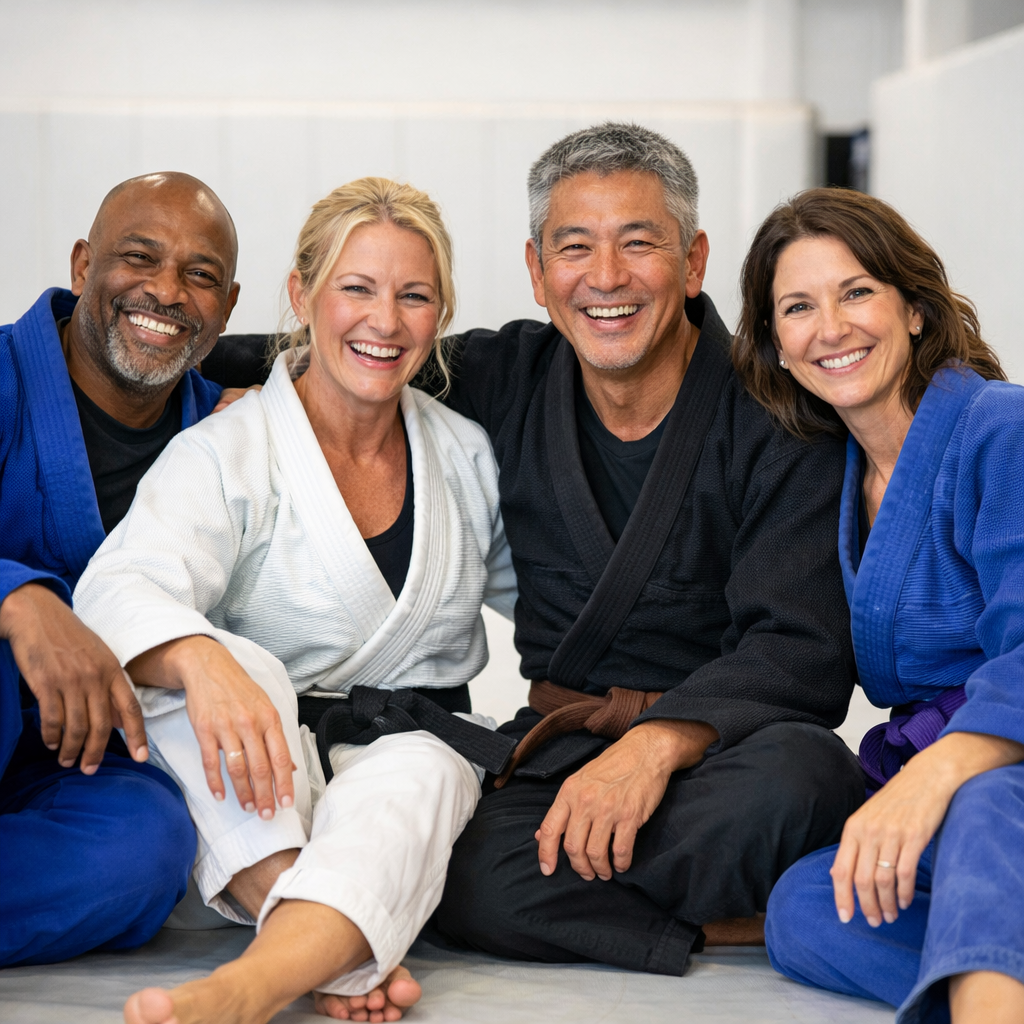
You didn't find jiu-jitsu early. Or maybe you did, stepped away, and came back. Either way, you're on the mats now — and you want to stay there.
Training BJJ after 30 is absolutely doable. Plenty of the most technical, dangerous grapplers in any gym are in their 40s and 50s. But the approach that works for a 22-year-old who can sleep four hours and bounce back from a tweaked knee in two days? That's not your approach anymore. And that's okay. Here's what actually works.
1. Warm Up Like It's Part of Your Training — Because It Is
When you're young, the warm-up is the thing you rush through before the real work starts. After 30, the warm-up is real work.
Cold muscles, stiff joints, and connective tissue that takes longer to get pliable are just biology. Fighting that reality is how you pull something in the first round and spend three weeks on the sideline.
A proper pre-roll warm-up should include dynamic hip circles, shoulder rotations, and spinal mobility work. Not static stretching — that's for after class. You want blood moving, joints lubricated, and your nervous system awake before anyone grabs your collar.
Give yourself at least 10–15 minutes. If the class warm-up isn't enough for you, get there early. Nobody's going to think less of you for it. In fact, the experienced guys in the room are probably already doing exactly this.
2. Tap Early, Tap Often — And Make Peace With It
This one is cultural as much as physical. There's a certain ego trap in BJJ where tapping feels like losing. You hold out a little longer. You try to escape from a position that's already locked in. And then something pops.
After 30, your ligaments and tendons don't have the same elastic forgiveness they once did. A knee bar held a second too long isn't just a tap — it can mean weeks or months off the mat.
Tapping early is not weakness. It's the strategy of someone who wants to be rolling in ten years. The submission will still be there next round. Your ACL won't grow back.
Build the habit of tapping the moment you recognize a submission is locked and you don't have a clean exit. Your training partners will respect it, your body will thank you, and your mat time will stay consistent.
3. Prioritize Recovery as Hard as You Train
Recovery isn't passive. It's not just "not training." It's the active process of giving your body what it needs to rebuild — and after 30, that process gets slower and demands more attention.
A few non-negotiables:
Sleep. This is the single biggest recovery lever you have. Seven to nine hours isn't a luxury; it's when your soft tissue repairs, your hormones regulate, and your nervous system resets. Cut sleep, and everything else on this list becomes less effective.
Nutrition. Protein intake matters more than most recreational grapplers realize. If you're training three or more times a week, you need enough dietary protein to support muscle repair. Hydration matters too — dehydrated joints are angry joints.
Active recovery. Light movement on off days — walking, swimming, yoga, or even a gentle drilling session — keeps blood flowing to sore areas without adding stress. Complete rest every single day off can actually leave you stiffer than if you'd moved a little.
Manage your weekly load. Three solid sessions per week with real recovery between them will yield better long-term results than five sessions that leave you grinding through training half-recovered.
4. Build a Body That Supports Your Game
BJJ will expose every weak link in your body. Tight hips, a weak posterior chain, poor shoulder stability — the mat finds all of it, usually at the worst moment.
Supplemental strength and mobility work isn't optional for the over-30 grappler — it's insurance. You don't need to become a powerlifter. You need to be resilient.
Focus on a few key areas:
Hip mobility. So much of your guard game, your scrambles, and your ability to move fluidly depends on hip range of motion. Daily hip work — even just 10 minutes — pays dividends on the mat and dramatically reduces lower back stress.
Posterior chain strength. Deadlifts, kettlebell swings, Romanian deadlifts. A strong posterior chain protects your lower back and knees, two of the most commonly injured areas in BJJ.
Shoulder stability. Band work, face pulls, and rotator cuff exercises are unglamorous but essential. Shoulder injuries are notoriously nagging and slow to heal.
Neck strengthening. Often overlooked until it's too late. Wrestlers have known this forever. A strong neck absorbs the torque and pressure of clinch work and headlock positions far better than one that's never been trained.
You don't need hours in the gym. Two focused 30–45 minute sessions per week of targeted work will make you harder to hurt.
5. Train Smart, Not Just Hard — Know When to Dial It Down
There's a difference between productive training and survival training. Productive training is challenging, technical, and leaves you tired but functional. Survival training is white-knuckling your way through sessions where everything hurts, you're exhausted, and you're just hoping not to get injured.
After 30, you have to develop the self-awareness to tell the difference — and the discipline to act on it.
This means:
Choosing your rounds wisely. You don't have to roll with everyone. It's okay to skip a round, ask for a technical roll, or flow with a less spazzy partner when your body is run down. This isn't avoiding hard work — it's managing the long game.
Listening to the difference between soreness and injury. Muscle soreness is normal. Sharp, localized, or persistent pain is your body flagging a problem. Ignore that flag long enough and a minor issue becomes a major one.
Taking deload weeks seriously. Every few weeks, cut your training volume back deliberately. Lighter rolls, more drilling, less intensity. This is how high-level athletes manage long careers, and there's no reason recreational grapplers shouldn't apply the same logic.
Knowing when to rest an injury. Ego-driven mat time through a real injury rarely shortens recovery. It almost always extends it.
The Long Game Is the Real Game
Here's the thing about BJJ after 30: you're not training for a single tournament. You're not trying to peak in six months. You're building something you want to be doing for decades.
The grapplers you'll admire most in twenty years aren't the ones who trained the hardest in their 30s and burned out by 45. They're the ones who were smart about it — who tapped early, slept well, moved every day, built resilient bodies, and showed up consistently.
Take care of yourself on and off the mat. That's how you stay in the game.
Train smart. Roll long.